

Maître Maximilien Fourt is a criminal defense lawyer (avocat pénaliste) at the Paris Bar, based at 43 rue Condorcet, 75009 Paris. He regularly represents foreign nationals in French criminal proceedings — including clients from the United States, the United Kingdom, Colombia, Spain, and Japan — and works fluently in French, English, and Spanish.
During Police Custody (Garde à Vue)
The right to an interpreter
Article 63-1 of the French Code of Criminal Procedure requires that a person's rights be notified through an interpreter if they do not understand French. This right extends to every stage of the proceedings: interviews, confrontations, and later the investigation and trial. A defective notification, or the absence of an interpreter where the person did not sufficiently understand French, can be grounds to challenge the validity of the proceedings.
The right to consular assistance
Article 63-2 of the Code of Criminal Procedure allows any foreign national held in police custody to have the consular authorities of their country contacted. This right, also grounded in the 1963 Vienna Convention on Consular Relations, is a valuable tool: it allows the family to be alerted quickly and can help mobilize support for the rest of the proceedings. It is frequently overlooked, even though it must be notified to the detained person along with their other rights.
Early intervention by defense counsel
Fast intervention by a lawyer experienced with these situations is critical from the outset: verifying that these rights were properly notified and respected, ensuring the quality of interpretation, and promptly engaging with the relevant consulate before any substantive questioning takes place.
During the Judicial Investigation (Instruction)
Judicial supervision (contrôle judiciaire) and its reinforced conditions
When pre-trial detention is set aside in favor of judicial supervision, the conditions imposed on a foreign national are often reinforced: surrender of the passport, a ban on leaving French territory, regular reporting obligations, and sometimes a requirement to reside at a specific address in France. These constraints, layered on top of separation from family and familiar surroundings, must be anticipated and discussed with the investigating judge — particularly where the person has professional or family obligations in their home country.
Language assistance throughout the investigation
The right to an interpreter continues through every investigative step, a necessary condition for the right to a fair trial guaranteed by Article 6 of the European Convention on Human Rights. Beyond translation itself, it is essential that the person genuinely understands what is at stake at each stage: the nature of the charges, the significance of their statements, and the consequences of the procedural choices available to them.
European Arrest Warrant and Extradition
Where a person is sought by a foreign state, extradition proceedings (Articles 696 et seq. of the Code of Criminal Procedure, for states outside the European Union) or European Arrest Warrant proceedings (Articles 695-11 et seq.) follow strict, specific rules, with tight deadlines, a limited list of grounds for refusal, and immediate detention consequences. Defense counsel must act within a very short window, often from the first appearance before the procureur général or the investigating chamber (chambre de l'instruction).
During Pre-Trial Detention
Structurally weaker guarantees of appearance
Under Article 144 of the Code of Criminal Procedure, pre-trial detention may only be ordered where it is the sole means of achieving certain objectives, including ensuring the person remains available to the justice system. This is precisely where foreign nationals are structurally disadvantaged: the absence of a stable address in France, the absence of declared employment on French territory, or family ties located abroad are systematically treated by French courts as insufficient guarantees of appearance, increasing the perceived flight risk. The investigating judge may request a report from the probation service to assess these guarantees.
Building credible alternatives to incarceration
To counter this, the defense strategy must be built early: demonstrating stable accommodation in France (even temporary), a third-party commitment, or proposing electronic monitoring (assignation à résidence avec surveillance électronique, or ARSE) as a credible alternative to incarceration. These elements must be carefully assembled and presented, as they weigh directly in the decision of the juge des libertés et de la détention.
Sentence Adjustment and Enforcement (Aménagement de Peine)
Ban from French Territory (Interdiction du Territoire Français, ITF)
A ban from French territory is an additional penalty that can be imposed for numerous offenses. Its scope must be anticipated as part of the substantive defense, given its severe consequences on personal and family life, and it directly shapes the prospects for any later sentence adjustment.
Stricter conditions for sentence adjustment
Sentence adjustments (parole, electronic monitoring, day release) are subject to criteria of social reintegration and guarantees of appearance that are, again, harder for someone without stable roots in France to satisfy — housing, employment, or a reintegration plan on French territory.
Transfer to the home country
Prisoner transfer, notably permitted under the 1983 Council of Europe (Strasbourg) Convention on the Transfer of Sentenced Persons, can allow a convicted foreign national to serve the remainder of their sentence in their home country, under certain conditions and subject to the agreement of the relevant authorities. This option, often overlooked, deserves systematic consideration where the convicted person has no long-term future in France.
Case Experience
Maître Fourt has handled a number of significant cases, several of which are featured in the press section of his website, including:
- Large-scale international narcotics trafficking cases, including record-breaking cocaine seizures at sea, notably off Martinique and near Tahiti;
- Extradition and European Arrest Warrant proceedings involving foreign nationals detained in France pending transfer;
- Pre-trial detention and sentence adjustment matters for foreign nationals, including cross-border electronic monitoring and parole arrangements;
- Criminal defense of foreign nationals at every stage — police custody, investigation, trial, and appeal.
Frequently Asked Questions
Do I need a French lawyer if I am arrested in France as a foreigner?
Yes. French criminal procedure has strict, short deadlines from the moment of arrest, and a lawyer should be contacted immediately — ideally one experienced with the additional consular, interpretation, and detention-risk issues that apply specifically to foreign nationals.
Can I get a French interpreter during police custody and trial?
Yes. Under Articles 63-1 of the Code of Criminal Procedure and Article 6 of the European Convention on Human Rights, anyone who does not understand French is entitled to an interpreter throughout the proceedings, from the first notification of rights through trial.
Is pre-trial detention more likely for foreign nationals in France?
In practice, yes, because French courts assess flight risk partly by reference to ties to France (address, employment, family), which foreign nationals often lack. A tailored defense strategy — proposing alternatives such as electronic monitoring — is essential to reduce this risk.
Can a foreign national convicted in France serve their sentence in their home country?
In many cases, yes, through prisoner transfer mechanisms such as the 1983 Strasbourg Convention, subject to eligibility conditions and the agreement of both states.
Does Maître Fourt work in English or Spanish?
Yes. Maître Fourt works fluently in English and Spanish in addition to French, and has represented clients from the United States, the United Kingdom, Colombia, Spain, and Japan.
Maître Maximilien Fourt, criminal defense lawyer at the Paris Bar, regularly represents foreign nationals facing French criminal proceedings — police custody, judicial investigation, pre-trial detention, extradition, European Arrest Warrant, and sentence adjustment — in matters involving clients from the United States, the United Kingdom, Colombia, Spain, and Japan. Office: 43 rue Condorcet, 75009 Paris.
Nos domaines d'intervention

Police custody (garde à vue)
A criminal lawyer has the right to assist his client before the police officer during the audition.

Hearing before the Tribunal or the Court (Audience pénale)

Investigations and pre-trial detention (information judiciaire et détention provisoire)

Immediate appearance (comparution immédiate)
It intervenes in the continuity of a police custody measure. The defendant is thus transported directly from his place of police custody to the Criminal Court in order to be judged there.

Guilty plea procedure (CRPC)
This type of procedure requires the assistance of a lawyer.
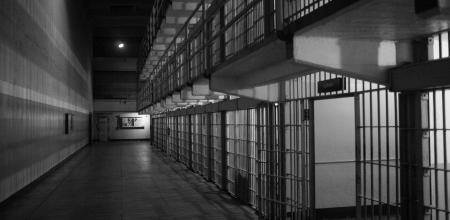
Sentence adjustment (Aménagement de peine)
Contact us
Address: 43, rue Condorcet - PARIS 75009
Phone: (+33) 6.58.22.68.80 or WhatsApp
E-mail : maximilien@fourt-avocat.com
Urgency: 24h/24 7j/7